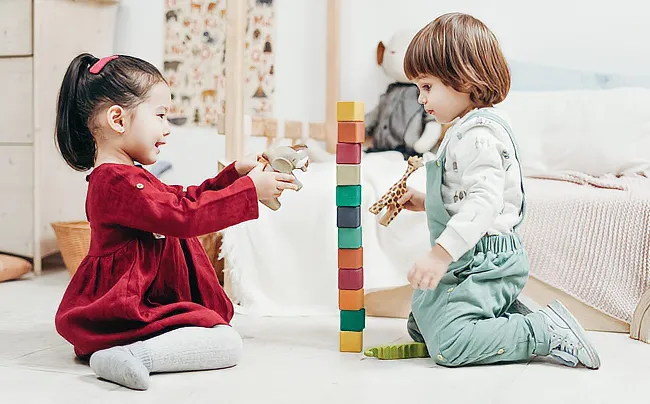
What is Montessori Learning

In recent years, there have been many early-childhood education methods on the rise. However, by the early 20th century, Dr Maria Montessori developed the Montessori Philosophy to enhance child-centred education by creating a method that emphasised a child’s natural development. This method focused on targeting each child’s unique needs and allowing them to learn at their own pace. Implementing these principles, a Montessori childcare center provides an environment that fosters independent learning and holistic development, making it an ideal setting for cultivating the innate potential of young learners.

What is Montessori Philosophy?

Dr Montessori believed that children learn better through an innate desire to learn and that to reach their full potential, they need an environment that fosters exploration, discovery, and independence starting from a young age. She believed it is of the utmost importance to encourage this method as early as possible whilst a child is receptive to certain types of learning experiences.

The Montessori classroom today provides specially crafted learning experiences for child-led activities. This experience encourages children to engage in spontaneous and purposeful activities, guided by a trained professional. The Montessori classroom and activities help children develop a joyful sense of discipline when it comes to learning and exploring the world of education.

What is The Montessori Method of Learning?

One of the main features of the Montessori method is the creation of a spacious and stimulating setting that allows children to pursue their natural curiosity. The method is based on several core principles, such as:

  1. Self-direct learning
    Children are encouraged to explore a wide range of activities and opportunities based on their personal interests. They have the flexibility to engage with different things and be independent, allowing them to learn at their own pace.
  2. Mixed-age classrooms
    The Montessori method differs from other teaching methods in how it fosters a cohesive classroom. It encourages students of different ages to learn together, ranging from 3 to 6 years old in one class. The older children are encouraged to help younger participants which in turn help their development process as well.
  3. Individualised learning
    Catering to each child’s unique needs, Montessori learning also enhances their natural curiosity through individual and personalised learning experiences. Teachers structure lessons based on each child’s pace and learning capabilities whilst providing a more open environment for each child.
  4. Hands-on learning and sensorial experience
    One of the main features of Montessori materials is that they appeal to the senses and invite children to explore them with their hands. Children can learn various concepts through different materials, which provide sensory feedback and stimulate their curiosity. Montessori materials are not just passive objects, but active tools for learning.
  5. Respect for the child
    The Montessori approach also views children as capable individuals who should always be treated with respect, trust and kindness. The Montessori classroom encourages and understands a child’s natural curiosity and gives them the ability to quickly learn and adapt using their own personal and lived experiences.
  6. Freedom within limits
    The Montessori method allows children to be creatively independent within the guidelines of their rules. This helps instil good values such as respect and cooperation to help a child become a contributing member of society.

Pros of Montessori Learning

The Montessori method helps children engage with their education and peers and helps them form strong values such as self-directed learning which allows a more open and explorative experience. Montessori learning also helps build self-confidence and embraces the natural potential of each child, here are a few more reasons why you should consider enrolling your child in a Montessori program:

Montessori promotes Independence Through Self-Paced Learning

Every child is different, based on their background, skillset, and learning pace. The Montessori method offers a sense of belonging for everyone, catering to each child to build a sense of self-confidence, and freedom. The Montessori method helps provides children with the room to grow and explore while instilling in them strong values of independence from an early age. The independent structure of the Montessori method is also beneficial as studies have shown that children gain valuable learning experiences and hit phycological, physical, and social milestones faster than those in traditional schools.

Montessori Learning Emphasises Hands-on Learning

Montessori classrooms are known for their outdoor activities, helping children explore the world around them which is important to a child’s development process. The Montessori method helps children discover creative and abstract ideas, through different activities and sensory-based learning. One of the benefits of Montessori learning is that it helps children to learn complex words and to recognise intellectual ideas. It also helps them to improve their fine motor skills, their visual-spatial skills and their hand-eye coordination. Montessori believed that children have absorbent minds, which is why it’s important to let them engage while they’re still very young. This allows children to explore their senses, beyond a typical classroom.

Develops Social Interaction Skills

Montessori programs are designed to be in groups for a reason. Group learning provides the best basis for developing a child’s social interaction skills and helps them embrace peer-to-peer learning. Older children are encouraged to interact with younger children by sharing a variety of activities and experiences while being in the same class which helps develop soft skills. This benefits both groups of children; an older child might learn to have better communication skills by sharing activities and lessons with a younger child, and a younger child benefits from faster growth while observing elders in the same class.

Nurture Self-Motivation and A Love for Learning

Children often see the learning process as a struggle or pressure. Through the Montessori learning process, children are encouraged to have self-motivation in the classroom resulting in a love for learning rather than a chore. Teaching children the Montessori values will help grow their curious mindset and the love to explore. Learning will no longer be a burden-filled experience, but a joyous journey, filled with unexpected findings and limitless potential. Introducing these values at an early age helps foster their curiosity and passion for learning and discovering new things. These skill sets set them up not only for the next stage of their education but for life.

Supports Special Needs Kids

Dr Montessori’s prior research on disabilities and education helped her understand the most effective educational approaches to help those with learning disabilities and retain knowledge. It is a foundation for many learning materials that we know and use today. This form of education is made to teach activities to special needs kids, ensuring that they have the same experience other kids do. Nowadays, the Montessori method applies to every child giving them the best learning experience possible, regardless of having preexisting special needs conditions or not.

Montessori vs Other Teaching Methods

The Montessori method is different from traditional school methods, as each process has very distinct approaches.

A Lasting Word from Kynd

The Montessori philosophy and method of learning offers a child-centred approach to education, emphasising children’s natural development, curiosity, and innate desire to learn. By providing a prepared environment that fosters exploration, discovery, and independence, Montessori classrooms cater to each child’s unique needs and learning pace. The Montessori method stands out for its emphasis on self-directed learning, mixed-age classrooms, individualized instruction, hands-on and sensory experiences, and the cultivation of respect for each child. This approach promotes independence, self-motivation, a love for learning, and strong social interaction skills whilst setting a solid foundation for a child’s lifelong educational journey.

Montessori Education at Kynd

At Kynd Montessori Childcare, we incorporate the Montessori method throughout all our programs with the help of our incredible teaching staff. Our classes are intentionally kept small to enhance one-on-one interaction between educators and children. By dedicating more time to each child, we nurture their creativity and support their social adjustment, ultimately contributing to their overall growth and development. The more time we put into our children, the greater they thrive in their creativity and social adjustment. Our programs are designed for children to adapt to the ever-changing complexities and problems of life and set them up for future schooling and life success.

We provide programs from toddlers to preschoolers with a variety of activities that you and your children can choose from.

Our curriculum covers a wide range of topics from sensorial development, arts & crafts, language, culture and many more.

Our values and commitment are to support families and children

Our staff also prepares daily reports for each child documenting their eating, sleeping and toileting patterns. We also record and provide monthly observations of your child’s progress, so if there are any unexpected learning roadblocks they are addressed quickly.

We want to teach, inspire and create the next generation of children encouraging them to become independent and confident learners that trust in their own abilities. Contact us to book a visit at Kynd Montessori, please use this form, email us at [email protected] or call us directly on 0426 286 676.

Early Childhood Education: The Foundation for Success

Early childhood education: An introduction

Many young families in Australia may ask the question, “What truly is early childhood education?” Sure, we know the overall idea that it involves teaching children at a young age, but what really does it mean and what are the benefits of early childhood education?

At Kynd Montessori Childcare Learning Centre, we like to feel we are there through every step to answer every question a parent might have. To us, no question is silly. In fact, we often find parents are shocked at how many people are asking the same questions but unsure whom to ask and how.

We like to cut it down simply and then really educate on the benefits of early childhood education and the types of early education available, so you can make the best decision.

Early childhood is incredibly important for the development of our little ones to help shape them into little individuals who contribute to the world they live in.

But first things first, what is early childhood education?

Simply put, early childhood education is the official term for formal or educational programs that help teach children at an early age (typically 0-8). During early childhood, a child’s brain is highly sensitive to the environment around them, and they continue to grow emotionally, physically, and socially.

Why is Early Childhood Education important?

A child needs a stimulative environment that encourages growth and supports sustainable development goals, focused on the development of critical development milestones, skills, and key concepts. This is when early childhood education comes along.

Early childhood education helps your child learn social-emotional skills, numeracy, and literacy whilst encouraging critical thinking. These are all important skills that are found within a well-rounded education that targets learning and development to prepare them for the future.

At this age, children are dependent on their environment including their parents, daycare providers, family members, and friends. They are incredibly impressionable, and their minds are like a sponge absorbing up all the information from their surroundings and learning through what they see, their interactions, and their experiences. It truly is incredible, but this is why early education is important and beneficial.

Benefits of Early Childhood Education

The purpose of Early Childhood Education is to provide children with strategies that help them develop the emotional, social, and cognitive skills needed to become lifelong learners. The Zero to Three Foundation considers the following skills to be the most important for young learners to master:

Helping brain development in young children

We’ve all heard the saying “A baby’s brain is like a sponge,” and in many respects this is true. An amazing fact is that babies are born ready to learn, absorbing all the environment around them. It is no surprise when we think about how more than one million neural connections form every second during the first few years of their life!

A little science lesson. We’re all about educating here at Kynd Montessori Childcare Learning Centre!
The vision and hearing pathways develop first in a child, which is then followed by early language skills and higher cognitive functions with a child’s vocabulary often quadrupling between ages two and four.

Why is this important when talking about Early Childhood Education?

Well, how a child’s brain grows and is strongly influenced by their surrounding environment and social interactions and connections. Every interaction is a learning opportunity, not just practising their vocal skills but also their social, cognitive, and emotional skills. These connections help a child understand the world around them, and as their understanding grows, so too does their understanding of social behaviours and the importance of connection. A child’s connections become more complex over time, from a baby dependent on their parent for social stimulation and emotions through learning facial expressions to the development of positive learning behaviours and social skills at a later stage.

Research has shown that Early Childhood Education plays an important role in a young child’s brain development.

To help reach higher levels of social skills and educational success, schools should be equipped with quality preschool programs and learning opportunities that develop and inspire their social, cognitive, and emotional learning further.

Making friends

Early childhood education and Montessori Childcare encourages children to share and play with their peers. The social skills they develop in this early stage can help your child understand how to develop friendships and relationships throughout their life.

Between the ages of 3 to 5, they will start to develop important interpersonal qualities such as understanding, showing empathy, and taking into consideration the feelings of those around them. During these connections, they will learn about how to interact, cooperate, and play with their peers, and they may even have a “best friend.”

Develop independence

Starting childcare is one of the most critical phases of a child’s life and sometimes the most daunting. For most children, starting daycare will be their first time apart from their parents and what they know.

However, starting childcare is an exciting time full of new experiences, educational material, and a new community. Navigating a new environment, through positive experiences and positive reinforcement can help build a child’s confidence and independence by exploring their identity and passion, and developing self-regulation skills.

Demonstrating healthy methods of self-regulation can help children understand who they are and the boundaries of relationships including concentrating, sharing, and taking turns.

Learning new routines

Adapting and accepting new routines is also part of your child’s development and growth. Routines can help a child feel secure within their environment and can help both their emotional and cognitive development. It’s very normal for children (and parents) to have feelings of anxiety when they first start childcare. It takes children time to get used to their new routines, build positive relationships with their educators and peers, and understand that their new environment is a fun, safe, and happy place.

By attending early education and care and establishing a routine with a child knowing what is expected of them, the situation and the environment can help manage separation anxiety and reduce problematic behaviour or tantrums.

Your child will start enjoying all the sounds, smells, people, and environment around them and start having fun and feeling safe. They will start to realise that it is a safe, comfortable and stimulating environment through repetition, and a mix of outdoor and indoor activities to accommodate their attention spans and encourage their developmental stages.

They will start to feel safe and secure with their own schedule, and the Montessori childcare centre will begin to feel like a second home.

Developing language and literacy skills

It is no secret that language provides the foundation for the development of literacy skills and communication. Through language, expanding their vocabulary and learning to read and write, a child can discover an understanding of words, and meanings to make connections between what they have read and their own life experiences. They can explore texts from a range of perspectives, share an enjoyment of language, and engage with words, sentences, and pictures to learn more about the world around them.

Learning mathematics and numeracy skills

Numeracy and mathematical skills add up to a great life skill for children to learn. Solving mathematical problems challenges a child to think strategically, investigate solutions, and face challenges. Reflective thinking strategies that consider all outcomes and learning from mistakes, if previous attempts are unsuccessful, is a great lesson to learn accomplished through instructive play and experiential learning.

Problem-solving, thinking and feeding natural curiosity

Children naturally have a curiosity to know how things work. The question “But why?” is often asked, which is great as it shows a child is inquisitive and wants to learn. Through both literacy, numeracy, and problem-solving, a child will understand how things work, how they can approach certain tasks in everyday experience, and comprehend concepts such as maths and problem-solving needed for school and life.

Getting a sense of sensorial skills

Sensorial learning stimulates a child’s five senses; taste, touch, smell, sight, and hearing. It allows children to use their senses to explore and understand the world around them.

Through sensory learning, a child learns how to use a range of tools, techniques, and resources to explore the natural and built environment around them during play.

Children are encouraged to manipulate, take apart, and reconstruct toys or learning material given to them to gain information and explore their purpose and function.

Through Montessori Sensorial activities, children develop the following skills that link to the EYLF:

The sensorial area in a Kynd Montessori classroom focuses on lessons and activities that help develop the five senses: seeing, hearing, touching, tasting, and smelling. The lessons and activities provided in the sensorial area of the classroom help children clarify, classify, and understand the world around them.

Practical Life

Practical life skills help a child develop from a young child to a young adult and then to a contributing member of society. Demonstrating awareness of others’ needs and being open to challenges whilst taking considerable risks are all skills that will benefit a child later in life.

Approaching and exploring new situations and making choices or decisions to navigate new environments will help a child build self-confidence, self-esteem and self-control.

Self-confidence is an important life lesson to learn. It also helps a child want to learn, as when they feel competent in their ability to believe in themselves, they are more willing to tackle obstacles and new challenges. Confidence is also important for social challenges such as healthy competition, sharing, playing, and making friends.

Another great practical life skill is self-control. Self-control is the ability to manage and express emotions in a healthy way, learning to cooperate and cope with frustration or resolve conflicts.

Care for the Environment

Caring for those around us and the environment helps us positively contribute to the world we live in. An Early Childhood Education that not only helps with academic skills but also increases a child’s knowledge of the importance of respecting and caring for their natural and constructed environments is crucial. Through outside play and exploration, a child can observe, respond, and create a relationship and connection with nature. Demonstrating respect for animals, plants, and places and taking responsibility for their own actions (such as picking up after the litter) is important for the education of our future generation.

What makes a good early childhood education program?

Enrichment inside and outside the classroom.

A great early childhood education offers a dynamic, enriching, carefully planned curriculum that challenges and inspires a child to grow both their skills and their passion.

A great programme will incorporate art, literacy skills, numeracy skill, experiences, play, and exploration.

Look for a kindergarten program that motivates your child’s passion to explore inside and outside of the classroom. A child’s mind needs to expand, to be free, and to see the wonders of the world. School programmes (whether inside or outside school hours) should feed this development. Developmentally unstructured (but monitored) playtime is essential for children at the kindergarten level and adds to their experience. During this time children are free to play, spend time socialising and explore their interests. This is also a great opportunity for you to get involved in the community and ask if there are any parental engagement programmes.

A balanced curriculum

A balanced curriculum has explorative play, and strong social/emotional programs but also provides time for academic learning. During these programs, children should learn problem-solving, independence, and teamwork. Toddlers require stimulation, patience, and energy and thrive in an active, social environment with their peers. During your child’s developmental stage, they are starting to both understand, navigate, and test the world around them and comprehend where they fit within it. A well-rounded breadth of early childhood education programs focuses on the child’s whole development and can be crucial for their mental, environmental, and social development, as they start to grow their character, self-esteem, and self-awareness.

Montessori is an education for independence, preparing not just for school but for life. – Dr Maria Montessori

At Kynd Montessori Preschool, our caring team respects the needs of every child, ensuring they feel safe, secure, and valued within our personalised learning environment. As teamwork is a vital life skill, we embrace inclusivity and interactivity. We also encourage children to be caring in their social interactions with peers, within both indoor and outdoor play.

Childcare ratio, staff retention, and personalised learning

A tailored curriculum and class size go hand-in-hand. It can be the difference between a good and an amazing school experience and can help students engage more academically and socially. One of the utmost important parts of a child’s learning is ensuring they feel valued, appreciated, and listened to. Research has shown that a lower child-to-carer ratio and good staff retention are essential in ensuring every child’s needs are met, not just on an educational, but also, on an emotional level. Be attentive to class size.

At Kynd Montessori Childcare Learning Centre, we choose to have smaller class sizes to increase 1:1 interaction time between educator and child. The more time we put into our children, the greater they thrive in their creativity and social adjustment. The ability to adapt to the ever-changing complexities and problems of life is seen as a predictor of future schooling and life success. We feel that every child’s experience is important, so we use a 5:1 Toddlers to Educators 10:1 Preschools to Educators. This ensures there are only 29 places for 10 toddlers and 19 preschoolers with 8 qualified teachers with decades of experience so that your child can have personalised, individualistic learning and receive the attention they deserve.

Seek enthusiastic teachers that inspire play and fun

One of the most important parts of choosing the right kindergarten program for your child is the teachers. Teachers make a school. Sure, ensuring all the needs are met academically is important, but that also extends to the teachers. Look for a kindergarten teacher that thinks creatively, encourages creativity, and is committed to furthering your child’s growth. What’s more, look for a school committed to furthering its teachers’ education. Once again, it’s important to have the spirit of a learning community that comes together to create a whole network that sets the foundations and support to tackle all the obstacles, anxieties, and development stages.

Learning should be fun!

You want to find the right early childhood education program and environment where the child feels happy, involved, and experiences the joy of learning. Ensure the program stimulates your child socially, mentally, and academically through role-playing, team building, and outdoor play.

At Kynd Montessori Childcare Learning Centre, our education materials and curriculum encourage both active, explorative, and inquisitive learning, allowing them to engage in activities they may not have access to at home and instil confidence at an early age.

Outdoor Play

Not only is outdoor play beneficial for the physical health of a child but also the emotional and mental well-being. Montessori Childcare centres actively encouraged outdoor play and engagement, and typically offer more outdoor space than daycare centres.

At Kynd, outdoor play is emphasised and embedded within our programs and curriculum. We believe it is important for a child to interact with nature and enjoy the explorations of the outdoors through outside activities. All through a caring and safe environment.

Kynd Montessori and EYLF: Supporting the transition to school and beyond

Our learning curriculum incorporates both the Montessori Method and Early Years Framework. Based on individual needs, each child has their own program which fosters development and positively challenges them.

Our centre has been created specifically to cater to the needs of parents and children seeking a quality educational experience in a nurturing environment. Our Early Works Program keeps you up to date with daily reports, as well as monthly observations of your child’s progress. We also believe it is important you and your child feel included and consulted through the process and planning of the curriculum design.

What is Montessori Early Childhood Education and the Early Years Learning Framework?

Montessori Education and the Australian Government’s Early Years Learning Framework (EYLF) work hand-in-hand.

They positively support a child’s learning with their unique approach that champions a child’s development to ‘Being, Belonging, and Becoming.’

Early Years Learning Framework (EYLF)

The EYLF is a key component of the National Quality Framework for early childhood education and care. It focuses on play-based learning strategies that are informed by a child’s passion and interests.

Early Years Learning Framework lies a specific emphasis on play-based learning and recognises the importance of communication, language, and social and emotional development.

Fundamental values of the curriculum framework are that the earliest development takes place through relationships and that children’s life is characterised by Belonging, Being, and Becoming connected by family, community, culture, and place.

EYFL offers a vision that ‘all children experience learning that is engaging and builds success for life’.

Key learning outcomes of the Early Years Learning Framework include:

  1. Children develop a strong sense of well-being and identity.
  2. Children learn how to connect with and contribute to the world around them to become contributing members of society.
  3. Children are confident, which results in inquisitive and involved learners.
  4. Children know how to navigate social interactions and experiences and become effective communicators.

Montessori Childcare

The Montessori Method of education nurtures and accommodates complete academic foundations through interest-based learning. It is designed with multiple learning styles and educational materials in mind, which makes it both versatile and diverse.

Montessori is unique in its practice, education materials, and its prepared environment (also known as the Montessori Classroom) which is unlike any standard Childcare centre in Australia.

The Montessori classroom is a carefully considered space, filled with educational materials personalised to each child’s learning style, needs, and specific stages of development. Children develop through child-led, self-paced, hands-on experiences using problem-solving skills and real-world applications.

Montessori learning outcomes include:

  1. Children develop independence, concentration, and real-life skills.
  2. Creativity is encouraged and self-awareness is supported.
  3. Children can understand and express a range of emotions, comprehend the consequences of their actions, and demonstrate awareness of others’ situations.
  4. Children can explore their inquisitive side and develop investigative skills. They know it is okay to ask questions and find out ways to apply a range of thinking strategies to find solutions to their problems.
  5. Children develop self-confidence and are encouraged to participate in physical social activities, following the rules of the games to interact with others.
  6. Children demonstrate care for nature and the environment and are taught about sustainability.

Kynd Early Childhood Education Programs

  • Children are encouraged to connect with and contribute to their world.

Kynd’s Early Childhood Education programs nurture real-life skills, champion an appreciation for diversity, and instil strong social skills that empower children to positively contribute to the world in which they belong.

  • Inspire a strong sense of well-being and identity.

Kynd’s Early Childhood Educations programs help develop a child’s sense of self, well-being, and confidence in their abilities.

  • Set strong academic foundations and create confident and involved learners.

The prepared Montessori environment is designed to encourage freedom of choice to empower children to create and direct their own learning based on their interests.

  • Create effective communication and social skills

Our play-based learning and balanced curriculum nurture the development of effective communication, literacy, problem-solving, and social skills.

Our early childhood education programs include:

  • Practical Life
  • Sensorial Development
  • Mathematics
  • Arts and Craft
  • Language
  • Culture and Geography
  • Early Years Learning Framework
  • Munch and Move.

We offer our programs for toddlers (2-3 years) and preschool (3-6yrs). We will continue our support for whatever stage your child is at. Our community is just that: A community for you and your child to be a part of throughout their education and life.

“At Kynd Montessori Childcare Learning Centre, a love of learning will not only guide your child through their transition into and during their school years but into their adult life.”-Kynd

Kynd Early Childhood Education Programs for Toddlers (2-3yrs)

  • Identification of common objects, naming colours, and naming body parts.
  • Numeral recognition and rote counting.
  • Speaking in sentences and expressing thoughts and feelings.
  • Physical activity participation.
  • Ability to use the pincer grip for writing and drawing.
  • Demonstration of self-confidence and interacting appropriately with others.
  • Physical activity participation.
  • Ability to use the pincer grip for writing and drawing.

Kynd Early Childhood Education Programs for pre-school (3-6yrs)

  • Formation of individual letters and numbers.
  • Numeral recognition and rote counting.
  • Read simple sentences and construct phonetic words.
  • Write and recognise their own name.
  • Awareness of the decimal system, addition and subtraction.
  • Physical activity participation and following rules in games.
  • Demonstration of self-confidence and interacting appropriately with others.
  • Work independently and concentrate effectively.
  • Respond to challenges and demonstrate problem-solving skills.

Kynd Curriculum: Our approach is backed by the Montessori learning approach

Our learning curriculum is a combination of the Montessori Method and the Early Years Framework. Each child receives their own program based on their individual needs, to foster development, and positively challenge them.

We teach children to become independent learners that trust in their own abilities.

The Montessori approach assists children to become:

  • Confident
  • Responsible
  • Independent
  • Valued
  • Secure
  • Respectful

Skilled Observation

One of our most vital teaching tools comes from observation without judgement. Skilled observation involves “following the child”: we study the habits of the child, define their needs and assist them in finding their strengths and capabilities

Respecting the Child

The child is assured of their own abilities by the Montessori teacher. By the teacher entrusting the child with appropriate decision-making challenges, they grow to learn from their own mistakes and develop a sense of judgement whilst respecting others.

The Individual

Montessori learning programs are personalised to each child, based on their individual stage of development, interests and needs. Montessori learning materials guide lesson plans and are presented one-on-one based on each child’s academic progress.

At Kynd Montessori Childcare Learning Centre, we value and are committed to supporting our families and children. Our staff prepare daily reports for each child on eating, sleeping, and toileting. Monthly observations of your child’s progress are also recorded, so if there are any unexpected learning roadblocks they are addressed quickly.

A Parent’s Guide to Choosing the Right Kindergarten Program

At Kynd Montessori, we celebrate uniqueness. We pride ourselves on our Montessori Curriculum and Montessori childcare. Our kindergarten programs are backed by the Montessori learning approach and honour the founder of the Montessori philosophy and Montessori education – Dr Maria Montessori. Our programs encourage each child’s strengths and interests as we look to offer an education for independence, preparing not just for school but for life. Our whole team at Kynd Montessori can’t wait to meet you and your little ones. Contact us today to find out more about our programs.

Choosing the right Kindergarten program: Where to start?

Choosing a kindergarten program and your child starting childcare can be an exciting time full of new experiences, new adventures and new people. However, choosing a kindergarten program for your child can seem like a daunting task. It may feel like so much is resting on this decision, and you may be overwhelmed with choices. The journey to finding a new school and choosing all the classes and programs can be highly emotional and confusing.

This is perfectly normal, and help is at hand.

Remember, you are never alone in the Montessori community. We understand that your child’s happiness is what is most important to you- together we can make their educational experience a memorable and fun one. Contact us anytime for more information. We are always here with a KYND face, helpful information, and support so that you do not feel alone at this time.

We understand that navigating questions such as ‘What curriculum is best?’ ‘What curriculums are available in Australia?’ and ‘What kindergarten programs are available to you?’ along with natural worries and doubts can be both confusing and tiresome.

Below are a few things you should consider when making your choice.

Choose between a private and a public kindergarten

Part of the initial decision-making process is choosing between a public or private education. But what does that mean? What is the difference? Private schools generate their own funds which give them independence and flexibility to offer more specialised programmes and curriculum. When choosing between a private and public kindergarten try thinking about your own philosophy of education. This may seem like an odd turn-of-phrase sound official but simply ask yourself what you want to get out of your child’s education and the environment.

Think about your own philosophy of education

Whilst contemplating this ask yourself a few important but necessary questions:

  1. What do you want for your child’s education?
  2. What does an ‘education’ look like to you?
  3. For example, is the ideal education environment for you:
  4. Collaboration and group work?
  5. A streamlined, rigorous approach to learning?
  6. Do you want them to experience and explore through inquisitive play?
  7. Does your child work better alone?

Asking these questions and truly imagining the environment each other lends themselves to will help you envision the learning environment, your child’s everyday schedule, education and growth. Once you have these questions and the answers in place, you can look to a kindergarten that shares the same philosophy (this can be through their core values, their community, their curriculum or their after-school activities).

Consider the whole school community

We say this often, but a child must have a learning community to grow emotionally, socially and mentally. But as the saying goes; It takes a village to raise a child.

Research has shown that School and family partnerships have a profound impact on a child’s outcome and well-being.

Parents, as primary educators, play a significant role in educating their children as they shape and challenge the values and character of their child. It is a significant partnership as educators we share, as together we look to nurture and offer our young people much hope in themselves and the ever-changing world they co-create.

When looking for a kindergarten programme it is easy to focus on the teachers than the school programmes themselves. Sure, educators are important, but it is vital to consider the school and the community as a whole.

Check out what they have to offer to get you involved, research their before/after-school programmes and explore the daily school schedules.

As a learning community, Kynd Montessori seeks to engage parents in their children’s education in a range of ways that place value on building a sense of community and developing authentic relationships. We offer many opportunities for parents and staff to come together through our many programs, including The Early Works Program.

EarlyWorks means easy access to records of your child’s progress, straightforward communication between parent and educator, and simplified event forms and documentation of tasks and checklists.

Explore the daily school schedule and before/after school programs

Look for a kindergarten program that motivates your child’s passion to explore inside and outside of the classroom. A child’s mind needs to expand, to be free and to see the wonders of the world. School programmes (whether inside or outside school hours) should feed this development. Developmentally unstructured (but monitored) playtime is essential for children at the kindergarten level and adds to their experience. During this time children are free to play, spend time socialising and explore their interests. This is also a great opportunity for you to get involved in the community and ask if there are any parental engagement programmes.

Many kindergartens offer afterschool programmes called ‘enrichment programs’. Ask the school about enrichment programmes on your initial visits.

Search for a balanced curriculum

A balanced curriculum has explorative play, and strong social/emotional programs but also provides time for academic learning. During these programs, children should learn problem-solving, independence and teamwork Toddlers require stimulation, patience and energy and thrive in an active, social environment with their peers. During your child’s developmental stage, they are starting to both understand, navigate and test the world around them and comprehend where they fit within it. A well-rounded breadth of kindergarten programs that focuses on the child’s whole development can be crucial for their mental, environmental and social development, as they start to grow their character, self-esteem and self-awareness.

Montessori is an education for independence, preparing not just for school but for life.

  • Dr Maria Montessori
    At Kynd Montessori Preschool, our caring team respect the needs of every child, ensuring they feel safe, secure and valued within our personalised learning environment. As teamwork is a vital skill in life, we embrace inclusivity and interactivity. We also encourage children to be caring in their social interactions with peers, within both indoor and outdoor play.

What curriculums are available in Australia?

My Time, Our Place (MTOP)
The Curriculum Framework for MTOP is comprised of three interrelated elements; Principles, Practice and Outcomes. The main core principles value that a child has a strong sense of identity, and well-being to raise confident effective communicators that are involved, connected and contribute to their world.

Early Years Learning Framework (EYLF)
Early Years Learning Framework lies a specific emphasis on play-based learning and recognises the importance of communication, language and social and emotional development.

Fundamental values of the curriculum framework are that the earliest development takes place through relationships and that children’s life is characterised by Belonging, Being and Becoming connected by family, community, culture and place.

Montessori Childcare
The Montessori Method of education nurtures and accommodates complete academic foundations through interest-based learning. It is designed with multiple learning styles and educational materials in mind, which makes it both versatile and diverse.

Montessori is unique in its practice, education materials and its prepared environment (also known as the Montessori Classroom) which are unlike any standard Childcare centre in Australia.

The Montessori classroom is a carefully considered space, filled with educational materials personalised to each child’s learning style, needs and specific stages of development. Children develop through child-led, self-paced, hands-on experiences using problem-solving skills and real-world applications.

At Kynd, our learning curriculum incorporates both the Montessori Method and Early Years Framework. Based on individual needs, each child has their own program which fosters development and positively challenges them.

Our centre has been created specifically to cater to the needs of parents and children seeking a quality educational experience in a nurturing environment. Our Early Works Program keeps you up to date with daily reports, as well as monthly observations of your child’s progress. We also believe it is important you and your child feel included and consulted through the process and planning of the curriculum design.

Childcare ratio, staff retention and personalised learning
A tailored curriculum and class size go hand-in-hand. It can be the difference between a good and an amazing school experience and can help students engage more academically and socially. One of the utmost important parts of a child’s learning is ensuring they feel valued, appreciated and listened to. Research has shown that a lower child-to-career ratio and good staff retention are essential in ensuring every child’s needs are met, not just on an educational, but also, on an emotional level. Be attentive to class size.

At Kynd Montessori Childcare, we choose to have smaller class sizes to increase 1:1 interaction time between educator and child. The more time we put into our children, the greater they thrive in their creativity and social adjustment. The ability to adapt to the ever-changing complexities and problems of life is seen as a predictor of future schooling and life success. We feel that every child’s experience is important and that is why we use a 5:1 Toddlers to Educators 10:1 Preschools to Educators. This ensures there are only 29 places for 10 toddlers and 19 preschoolers with 8 qualified teachers with decades of experience so that your child can have personalised, individualistic learning and receive the attention they deserve.

Seek enthusiastic teachers that inspire play and fun

One of the most important parts of choosing the right kindergarten program for your child is the teachers. Teachers make a school. Sure, it is important to ensure all the needs are met academically but that also extends to the teachers. Look for a kindergarten teacher that thinks creatively, encourages creativity and is committed to furthering your child’s growth. What’s more, look for a school that is committed to furthering the education of its teachers. Once again, it’s important to have the spirit of a learning community that comes together to create a whole network that sets the foundations and support to tackle all the obstacles, anxieties and development stages.

After all, learning should be fun!

Learning should be fun!

That brings us to our next point: Fun. Remember fun? Before bills, deadlines and the stress of … life. Those carefree days were full of adventures and fun with the joy of learning and experiencing everything for the first time. You want to get the right kindergarten program and environment where the child feels happy, involved and the joy of learning. Ensure the kindergarten program stimulates your child socially, mentally and academically through role-playing, team building and outdoor play.

At Kynd, our education materials and curriculum encourage both active, explorative and inquisitive learning, allowing them to engage in activities they may not have access to at home and instil confidence at an early age.

Outdoor Play
Not only is outdoor play beneficial for the physical health of a child but also the emotional and mental well-being. Childcare centres actively encouraged outdoor play and engagement and typically offer more outdoor space than Daycare centres.

At Kynd, outdoor play is emphasised and embedded within our programs and curriculum. We believe it is important for a child to interact with nature and enjoy the explorations of the outdoors through outside activities. All through a caring and safe environment.

Above all, visit.
Make sure that you visit the daycare centre to get a feel of the environment and ask about its programs. You can schedule a tour to get a better idea of the quality of care your child will receive and what educational resources are available.

Many centres organise initial centre tours to help you get a better feel for the environment, navigate your way around, check the classes, and get a better idea of the quality of care your child will receive. This is also the perfect opportunity for you to ask what programs and educational resources are available.

Attending orientation sessions and centre tours will excite your child for their new adventure and help you to see if the programs and environment are right for them. You may find they settle into some classes more than others and may start to play straightaway with the fun toys that are available to them during the tour.

The initial centre tour will help you get familiar with the services that the centre provides and ask the carers or educators about orientation programs and transition mornings, playgroups, or playtimes for parents and children to help settle in. Taking your child on a little tour to walk through the rooms and get familiar is an essential part of a childcare’s settling-in program and services.

If you have booked a tour at Kynd Montessori, do not hesitate to ask all the questions you need answers to, regarding our hours of operation, fees, our Montessori curriculum, policies on discipline and safety, staff qualifications and more. There is no such thing as too many questions when it comes to your child’s well-being.

What to look for when you visit

Above all look for an inviting place where you feel your child will be comfortable and safe and that provides many programs and learning opportunities.

During the visit, you can meet the teachers and introduce your child to them, which is an excellent way for them to build trust and a bond. It will also be an opportunity for you to ask your child’s centre manager or room leaders for information about the curriculum, teaching methods, activities and settling tips to gauge what will happen in the first few weeks of your child’s childcare journey.

The orientation programmes can also help you and your child to get to know your settings, the early childhood educators, and other children and parents, building on conversations from the initial centre tours.

Talk to other parents and get referrals from friends

When touring the centre, talk to current parents they are a great resource when trying to see if the centre is the right one for your child and is a chance to hear stories about personal experiences to alleviate those doubts you may have.

Likewise, ask your friends about their experiences and get recommendations or referrals. The most important thing is that you understand what kindergarten programmes are available, whether the school is a good choice and can provide all you need and what extra activities the centre has that will benefit you and your child.

Ask questions such as:

  • Why did they choose the school?
  • What programs do their children enjoy?
  • What is the expectation for parent involvement?
  • Are they or their children part of any after-school programs?

Parents are usually the best people to gauge the experience you and your child can expect and find out what is great about the school and what is not so great. But remember, everyone’s experience is different and their expectations or wants from a school may differ from your own.

Orientation programs provide you with the chance to hear stories about personal experiences from other parents, children, or educators to alleviate those doubts they may have had when choosing childcare and help you and your child prepare for the separation anxiety that can often occur. Knowing your child is in safe hands in a safe and secure environment for them to grow is the most important part of settling in.

The most important tip of all… ask questions!

No question is too small, too silly or incorrect. Make a note of any questions you have and have them handy with every phone call, visit or teacher-parent meeting. It’s normal to have lots of questions as this is an important step in your child’s educational journey. Ask questions about the curriculum, the academic disciplinary policies, after-school programs, recreational activities and facilities, the lunch programs, school events and any other questions that may come to mind to help you visualise what your child’s daily life will look like.

At Kynd, we like questions as this helps us grow. Here are some questions to ask:

  • What after-school programs do you have?
  • What is your curriculum?
  • Does the curriculum involve outside play? What sort of outside facilities and activities are available?
  • Do you encourage teamwork and socialising in your curriculum?
  • Do you offer extended care?
  • Do you have any lunch programs?
  • Do you support children with additional needs? What support is provided?

Look for a kindergarten program with individualised learning

Individualised Learning by Kynd Montessori

Kynd Programs

Our individualise programs include:

  • Practical Life
  • Sensorial Development
  • Mathematics
  • Arts and Craft
  • Language
  • Culture and Geography
  • Early Years Learning Framework
  • Munch and Move

We offer our programs for toddlers (2-3yrs) and preschool (3-6yrs). We will continue our support for whatever stage your child is at. Our community is just that: A community for you and your child to be a part of throughout their education and life.

“At Kynd Montessori, a love of learning will not only guide your child through their transition into and during their school years but into their adult life.”-Kynd

Kynd Programs for Toddlers (2-3yrs)

  • Identification of common objects, naming colours and naming body parts.
  • Numeral recognition and rote counting.
  • Speaking in sentences and expressing thoughts and feelings.
  • Physical activity participation.
  • Ability to use the pincer grip for writing and drawing.
  • Demonstration of self-confidence and interacting appropriately with others.
  • Physical activity participation.
  • Ability to use the pincer grip for writing and drawing.

Kynd Programs for pre-school (3-6yrs)

  • Formation of individual letters and numbers.
  • Numeral recognition and rote counting.
  • Read simple sentences and construct phonetic words.
  • Write and recognise their own name.
  • Awareness of decimal system, addition and subtraction.
  • Physical activity participation and following rules in games.
  • Demonstration of self-confidence and interacting appropriately with others.
  • Work independently and concentrate effectively.
  • Respond to challenges and demonstrate problem-solving skills.

Kynd Curriculum

Our learning curriculum is a combination of the Montessori Method and the Early Years Framework. Each child receives their own program based on their individual needs, to foster development and positively challenge them.

We teach children to become independent learners that trust in their own abilities.

Our approach backed by the Montessori learning approach

The Montessori approach assists children to become:

  • Confident
  • Responsible
  • Independent
  • Valued
  • Secure
  • Respectful

Skilled Observation
One of our most vital teaching tools comes from observation without judgement. Skilled observation involves “following the child”: we study the habits of the child, define their needs and assist them in finding their strengths and capabilities

Respecting the Child
The child is assured of their own abilities by the Montessori teacher. By the teacher entrusting the child with appropriate decision-making challenges, they grow to learn from their own mistakes and develop a sense of judgement whilst respecting others.

The Individual
Montessori learning programs are personalised to each child, based on their individual stage of development, interests and needs. Montessori learning materials guide lesson plans and are presented one-on-one based on each child’s academic progress.

At Kynd, we value and are committed to supporting our families and children. Our staff prepare daily reports for each child on eating, sleeping and toileting. Monthly observations of your child’s progress are also recorded, so if there are any unexpected learning roadblocks they are addressed quickly.

Kindergarten programmes that offer extra help

We all need a little extra help sometimes. When choosing the right kindergarten ask the school about their policy for children that may require extra help or for children who are ahead. Every child’s development is different, and many students work at different levels. Look for a kindergarten that structures its programmes and lessons with this in mind. A child should never feel like they are behind, or they are not inspired, instead, a child should feel motivated and encouraged and their needs understood.

What should I do if I need extra support or have any questions?

If you have questions, talk to your child’s early childhood educators or carers. They can and will help.

Starting childcare and finding the right kindergarten program can be stressful and challenging. It’s very common to feel anxious and uncertain at the beginning of your childcare journey. First and foremost, contact the childcare provider, who will be more than understanding and welcome you to share your questions or concerns. As a childcare team, we are here to support you in any way we can. We are deeply honoured that you have entrusted us with the education and care of your child and strive to create a home away from home for your child and to provide you with a supportive community for you and your family. Look for kindergarten programs that support you as a parent and seek to get you involved. First impressions count, if you feel supported and that all your concerns have been addressed within initial contact chances are you’re on to a winner.

KYND- A learning community with you and your child’s needs in mind

As the saying goes, it takes a village to raise a child.

Research has shown that School and family partnerships profoundly impact a child’s outcome and well-being. It is a significant partnership we share as educators, as together we look to nurture and offer our young people much hope in themselves and the ever-changing world they co-create.

As a learning community, Kynd Montessori seeks to engage parents in their children’s education in various ways that place value on building a sense of community and developing authentic relationships. We offer many opportunities for parents and staff to come together through our many programs. For information on the programs we provide, and any information within our article, reach out to us by email or phone.

We hope our guide has helped. When looking for the right kindergarten program for your child, consider your child’s needs while making the final decision; whether the daycare centre and its programs are a good fit for your child’s personality, interests and requirements.

But ultimately, trust your gut instinct when zeroing in on your decision. If something doesn’t feel right, keep the search going until you find one that you feel the most comfortable with.

Kynd Montessori – A preschool and early learning centre that’s Kynd by name and kind by nature.

We understand that when it comes to childcare and families, it is not one size fits all and that circumstances vary. At Kynd Montessori, we pride ourselves on providing a personalised childcare service to suit you and your child, whatever the circumstances.

We are an educational community that cares. We are here to question with non-judgement, advice and care to provide you with all the information you need. We believe that a parent should feel assisted, listened to and involved through every step of their child’s education, starting from now at the beginning of your child’s journey as well as yours.

To book a visit at Kynd Montessori, please use this form, email us at [email protected] or call us directly on 0426 286 676.

Tips for Starting Childcare

Starting childcare can bring up some battling emotions for you and your child. Feelings of anxiety, trepidation, excitement, and uncertainty can bubble their way to the surface and are often followed by stress leading up to the big day. Starting childcare is one of the most critical phases of a child’s life – and sometimes the most daunting. For most children, starting daycare will be their first time apart from their parents and what they know.

However, starting childcare is an exciting time full of new experiences, educational material, and a new community. It may also bring up new questions with uncertain answers, but these feelings are perfectly normal.

Help is at hand.

Below are some tips to get organised ahead of time, build a positive experience, and support your child as they settle into their new environment, new routine, and new learning community. We have curated a few tips, tricks, and trials you may meet along the way to help you and your child get prepared for starting childcare.

By following these steps, we hope that you and your child will enjoy this new chapter in their life and make a smooth, stress-free, and enjoyable transition and journey to adjust to a safe, fun, and happy environment full of amazing learning opportunities.

Remember, you are never alone in the Montessori community. Contact us anytime for more information. We are always here with a KYND face, helpful information, and support so that you do not feel alone at this time. Visit us anytime.

First step: Find the right daycare

Finding the right daycare can be challenging, but you only need to remember a few key things to ensure that you find one that suits your needs as well as your child’s.

Firstly, do your research and find a list of licensed daycares in your area. Then have a look at their reviews, ratings and accreditation. You can also ask for referrals from family, friends or neighbours who have used a particular daycare’s services to get an even better idea.

Secondly, make sure that you visit the daycare centre to get a feel of the environment and its workings. You can schedule a tour to get a better idea of the quality of care your child will receive, how safe the environment is and what educational resources are available.

If you have booked a tour at Kynd Montessori, do not hesitate to ask all the questions you need answers to, regarding our hours of operation, fees, our Montessori curriculum, policies on discipline and safety, staff qualifications and more. There is no such thing as too many questions when it comes to your child’s well-being.

Finally, consider your child’s needs while making the final decision; whether the daycare centre is a good fit for your child’s personality, interests and requirements.

But ultimately, trust your gut instinct when zeroing in on your decision. If something doesn’t feel right, keep the search going until you find one that you feel the most comfortable with.

Second Step: The Orientation Process

Visit the school with your child

Before starting childcare, it is important to familiarise your little one with their new environment, where they will spend considerable time in their early years. Your child may be apprehensive of the new environment, and often seeing their parents within the space before they start helps a child feel safe and accept the environment around them, letting them ease in when you eventually must leave them. Attending orientation sessions and centre tours will excite your child for their new adventure and help them settle in.

Many centres organise initial centre tours to help you get a better feel for the environment, navigate your way around, and check the classes to ease your mind that the place is safe and the perfect place for your child. The initial centre tour will help you get familiar with the services that the centre provides and ask the carers or educators about orientation programs and transition mornings, playgroups, or playtimes for parents and children to help settle in. Taking your child on a little tour to walk through the rooms and get familiar is an essential part of a childcare’s settling-in program and services.

These services provide you with the chance to hear stories about personal experiences from other parents, children, or educators to alleviate those doubts they may have had when choosing childcare and help you and your child prepare for the separation anxiety that can often occur. Knowing your child is in safe hands in a safe and secure environment for them to grow is the most important part of settling in.

Most children will experience anxiety and may need a learning community with parents and educators working together to build a special relationship and make the transition smoother.

At Kynd, our Montessori educators are attentive to your child’s anxieties as well as yours. We understand how difficult this new journey is and that the first steps are the hardest. We also know how challenging it can be to leave your child, especially if they are crying and it’s their first time being apart. We know it takes time, reassurance and someone to guide you through the process to put your mind at ease.

We recommend that you bring your child to our centres a few times to help them adjust during the orientation process and help come together as a learning community to lay the groundwork for a long-term, lasting relationship built on trust, open communication and information.

We recommend attending two to three weekly orientations to help ease your child into the environment. They are free of charge and usually last around an hour.

Introduce your child to the teachers and get familiar with educators

During the visit, you can meet the teachers and introduce your child to them, which is an excellent way for them to build trust and a bond. It will also be an opportunity for you to ask your child’s centre manager or room leaders for information about the curriculum, teaching methods, activities and settling tips to gauge what will happen in the first few weeks of your child’s childcare journey. When armed with knowledge, you can answer any question your child may have to prepare them both practically and emotionally and discuss any concerns that may make them reluctant to start. Overcoming these anxieties by meeting the educators who will be involved in the next step of your child’s life can make the transition a comfortable and enjoyable experience.

The orientation programmes can also help you and your child to get to know your settings, the early childhood educators, and other children and parents, building on conversations from the initial centre tours.

Talk to your child

Talking positively to your child about the new environment, friends, educators, and all the fun things they will experience will help put them at ease. It is also a critical step in developing a new routine and letting them know what to expect in the lead-up to starting school.

Reading books or telling stories about starting childcare and making new friends is a safe way for your child to understand new events and explore any strong emotions they might go through, such as friendship, anxiety, apprehension, happiness, sadness and loneliness. This will also help them develop the emotional, independent and social skills required to grow as an individual.

What can I do to help ease my child’s separation anxiety?

It’s very normal for children (and parents) to have feelings of anxiety when they first start childcare. It takes children time to get used to their new routines, build positive relationships with their educators and peers, and understand that their new environment is a fun, safe, and happy place. Supporting children with separation anxiety can be challenging; however, remember that this stage will soon pass and that most children are settled within a few minutes of their families leaving. If you are ever concerned, you are always welcome to call the centre to check in on your child or book a meeting with the Centre Manager to discuss additional support for settling your child.

Tips to Ease Separation Anxiety

  • Bring your child on the initial centre tour, so they develop a sense of familiarity.
  • Talk positively about the exciting things they will experience, play with, and learn at Montessori Academy.
  • Involve your child in choosing, organising, and labelling the items they will take with them to childcare.
  • Talk about their new routine and what to expect in the lead-up to starting childcare.
  • Attend the orientation session with your child to help them settle into their new environment.
  • Talk about the emotions they may experience and how they can help manage their feelings.
  • Read stories about starting school.
  • Establish a quick goodbye ritual where you leave smiling, calm, and confident to build your child’s confidence and sense of security in their new environment.
  • Be consistent with drop off and pick up times, so your child becomes familiar with their new routines and knows what to expect.
  • Practice being apart by leaving your child with a trusted adult or family member for a few hours.
  • Tell them when you will pick them up in child-specific terms, i.e. “I’ll pick you up after rest time before afternoon snack.”

Take a look at our blog for additional resources.

Talk to your child’s main educator

In the weeks before starting, you will find out about your child’s main educator and can talk to them more in-depth so they can get to know your child and understand their needs. Write down any information your early childhood educator needs to know about your child before they start. Including the following information is a must:

  • Food allergies and medical conditions. Noting down any food allergies, intolerances, or medical needs is imperative. Including information on medication and concise instructions on what to do under special circumstances (such as epilepsy or allergic reactions) is of the utmost importance.
  • Any information regarding your child’s well-being, such as sleep patterns, emotional and social preferences and any special comfort items, such as special toys.
  • Let the carer know about your child’s particular interests, such as dinosaurs, space or Barbie.
  • Voice any concerns about your child’s development.
  • Let them know about your family circumstances and any special conditions that may affect your child or their care plans, such as custody arrangements.
  • Bring any proof or information regarding your child’s immunisation status.

Third Step: Preparation is Key

You can prepare your child for childcare and make the process fun by practising their routine and involving them in preparing or shopping for the things they will need.

Routine

Practising the ‘school run’ by running through what a typical day will look like, such as waking, dressing, having breakfast and walking/driving through the route to the childcare centre, is a great way to get them acclimated to the daily routine.

Asking your childcare educator about your child’s school routine and making this part of your child’s home routine, including lunch, playtime, and nap times, is excellent for helping them adjust to their new schedule and avoid tiredness or feeling overwhelmed.

Get organised

Make it fun! Buying a new backpack, letting them pick a soft toy and testing out new lunches is a fun experience that will be part of their every day from now on. Depending on your childcare’s stationery or specific equipment requirements, you may need to shop for school accessories before your child starts. Some centres provide the equipment, lunches, snacks and other necessities such as nappies.

Lots of parents have a special set of clothes just for daycare called a “daycare wardrobe”. It’s made up of simple items like t-shirts, leggings, and jumpers that you don’t worry about getting dirty or stained with paint. The clothes should be comfortable but slightly bigger so they do not quickly grow out of them and can be worn out (no sleeves or trouser leg dragging!).

Make sure you purchase and pack everything your child needs, including a change of clothes, drink bottles, lunch packs, sunhats… anything they will need for every occasion, come rain or shine.

Don’t forget to label everything

Get some labels and label everything! Any of their belongings must be labelled to avoid clothing and bottles getting mixed up.

Remember to label:

  • Lunchboxes
  • Bags
  • Drink bottles and bottles containing milk
  • Hats
  • Clothes
  • Socks
  • Shoes
  • Teddies or comfort blankets.

The cheapest way is to get a permanent marker, but you can purchase special labels. Of course, we can’t guarantee you won’t lose an item or two (or often one lonely shoe), but labelling is a parent’s no. 1 step to getting prepared.

The night before starting childcare: practical tips

Add a reminder on your phone and make sure everything is ready to go the night before. Then, lay out everything your child will need the following day, all labelled, ironed, and ready to go. The first few mornings may be hectic as you get used to the routine and try to avoid the last-minute rush. However, preparing, organising, and ironing all clothes, lunch boxes, and backpacks will take the stress out of the first few days!

The night before starting childcare can be hectic and stressful. To ensure you and your child are ready for the following day, here are some tips:

  • Prepare a healthy dinner to get their belly full and happy, ready for all the activities the next day.
  • Ensure your child goes to bed early for a good night’s sleep. We all know that sleep can affect how a child feels the next day and can put a damper on their experience. Getting a good night’s rest will ensure they are up bright and early the next day, ready to take on all the fun activities with plenty of energy.
  • Label and pack everything your child will be taking to childcare, including bottles, formula, nappies, clothes, spare clothes, and any necessary medication or medical records. Remember to pack special comfort items such as a teddy, blanket and a family picture.
  • Prepare and pack food, and set a reminder that it is in the fridge for the next day.

What should I pack for the first day?

At Kynd Montessori Childcare, we want to set your child up for a successful transition to childcare. This means ensuring your child has all the comforts of home to feel safe and secure at their new home away from home. We ask that families pack the items below to ensure children are familiar with their new setting.

Toddlers and Pre-schoolers Aged 2-6

  • Water bottle labelled with your child’s full name.
  • Sun-safe hat labelled with your child’s full name.
  • Two sets of spare clothes labelled with your child’s full name.
  • Healthy lunch in a labelled lunchbox if your childcare centre is non-catered.
  • Backpack labelled with your child’s full name.
  • Cot-sized bed sheets and a blanket are stored in a calico bag labelled with your child’s full name (supplied weekly).
  • 3-4 nappies per day, wipes, and nappy rash cream (you can supply these weekly).
  • Comforter if your child needs one.

Infants Aged 0-2

  • Water bottle labelled with your child’s full name.
  • Backpack labelled with your child’s full name.
  • Sun-safe hat labelled with your child’s full name.
  • A spare set of clothes labelled with your child’s full name.
  • Bed sheets and blanket labelled with your child’s full name.
  • Re-usable fabric bag (to store your child’s sheets) labelled with your child’s full name.
  • A healthy lunch in a labelled lunchbox if you’re attending a non-catered centre.
  • Bottles and formula or expressed breastmilk labelled with your child’s name (if your child needs).
  • 3-4 nappies per day, wipes, and nappy rash cream (you can supply these weekly).
  • Comforter or dummy if your child needs one.

Fourth Step: Starting Childcare & Building Trust (First and Second Week)

First day

Be prepared for a tough first day.
The first day will always be challenging. In fact, the first few weeks may be the toughest experience you have yet to face with your little one. It’s natural to be anxious and feel a pang of guilt knowing you will drop them somewhere they may consider strange, new and scary at first. This is completely normal. Separation anxiety and nerves during the period of adjustment are understandable. Most probably, this is the first time you have been away from your child for a lengthy period.

To make things easier, pack something of comfort from home – a cuddly toy, a family photo, their favourite blanket or anything you feel they can cuddle and hold when they feel unsure or sad.

It is going to be tough; it is a big adjustment for such a little person, and the feeling of mum/dad guilt is all too real.

What time should I arrive?
We recommend that families contact their Centre Manager to discuss their arrival time for the first day. Where possible, your Centre Manager or child’s Room Leader will want to greet you and help you settle your child into their new environment.

What should I expect when I arrive?
Upon arrival, you will be greeted warmly by your Centre Manager or your child’s Room Leader. They will show you how to sign in, where your child’s locker is, where to put their belongings, and where the bathrooms and amenities are located. Next, they will introduce your child to their classmates and welcome them to the classroom.

Once your child has been introduced, we recommend that families say a quick goodbye at the door and leave the classroom. It’s best not to linger, as this can cause confusion and prolong separation anxiety.

Families are welcome to stay on the premises for a short period (out of sight) as their child settles in. Please talk to your Centre Manager if you need any support settling your child or have any questions or concerns.

The drop-off
The dreaded drop-off is one of the most challenging times – there may be tears, there may be tantrums… and then there is the child’s emotion to deal with. The most important thing to do to bring them comfort is cuddling them, let them know you will be back and remind them of all the fun things they will be up to. Hug them, let them know they are safe and leave smiling. Remember, they will feel your stress; let them know you are excited, happy and relaxed in the environment and situation.

Don’t linger
Give them enough time to stay with them but don’t linger. Saying goodbye is never easy and can be heartbreaking, but it can be even harder if you drag it out. Expect crying, and them gripping you, but drop them off and let the childcare worker calm them down after. Your presence for too long will make their job harder. Children often calm down when distracted.

It gets easier
As the days and weeks go by, gradually, it will get easier – fewer tears, less resistance. Sad is the day when they walk in without even acknowledging you are leaving.

Some days are easier than others. However, after a while, and as they become older, they will become aware and start developing a relationship and trust with the childcare staff and the other children.

This is something the team, your child, and you can work on over the first few weeks through conversations, activities, shared relationships, character-building and familiarity.

How can I check in to see if my child has settled?

Families are welcome to call the centre to check in on their child at any time throughout the day. Our team will always provide you with open and honest feedback about how your child is settling in. If your child is unsettled, rest assured that an educator will contact you and advise you if you need to pick them up. Families also ask to receive regular photo updates throughout the day. These updates show what activities your child is engaging in and their eating, sleeping, and toileting schedule.

What time should I pick my child up?

We recommend that families pick up a little earlier during their child’s first week to help ease them into their new routine. Earlier pick-up isn’t compulsory; however, many families have provided feedback that this was helpful for them.

Fifth step: The Familiarity Period (Third and Fourth Week)

As they get accustomed to the routine and form bonds with the childcare team or at least one or a few of their carers, you will find fewer tears, and they will settle in. This familiarity period often spans the third and fourth weeks.

Sixth step: Feeling Safe (Fifth and Sixth Week)

By the fifth and sixth weeks, familiarity and the bond will be established, and your child will start enjoying all the sounds, smells, people and environment around them and start having fun and feeling safe. They will start to realise that it is a safe, comfortable and stimulating environment. And through repetition, they will start to feel confident that you will return to them at the end of the sessions.

They will start to feel safe and secure with their own schedule, and the childcare centre will begin to feel like a second home.

How long will it take for my child to settle in?

Every child is different when it comes to settling into childcare. Some children settle within a few days, others within weeks, and some may be unsettled at drop-off for extended periods. Many factors affect a child’s settling time, including their personality type, learned behaviours, separation anxiety, enrolment pattern, age and stage of development, and what’s happening in other areas of their life. If you have any concerns about how your child is settling in, please talk to your Centre Manager or your child’s Room Leader. They will work with you to help your child make a smooth and happy transition.

Conclusion

As a child grows from dependent baby to independent individual, they need a learning community behind them that sets the foundations and support to tackle all the obstacles, anxieties and development stages. The first few weeks in a new childcare environment can be a significant change, and it is not without its challenges.

To help you and your child start childcare and settle into this fun, new, but strange environment, you can find ways to make the transition easier using this guide. But remember, do not expect too much from your child or yourself during this time. Allow the emotions and acknowledge that they are valid. Don’t judge how you or your child behaves, struggles or tackles these first few months. Be prepared for separation anxiety, clinginess and tantrums. It is completely natural as they settle into their new place and find their way in this world. Once you have established a routine, it will get easier, even if you don’t feel like it will. You will have questions. Question everything. It is healthy and essential for you and your child to be armed with all the information required to make the settling-in period easier.

What should I do if I need extra support or have any questions?

If you have questions, talk to your child’s early childhood educators or carers. They can and will help.

Starting childcare can be a challenging time for families. It’s very common to feel anxious and uncertain at the beginning of your childcare journey. First and foremost, contact your childcare provider, who will be more than understanding and welcome you to share your feelings and experience. As a childcare team, we are here to support you in any way we can. We are deeply honoured that you have entrusted us with the education and care of your child and strive to create a home away from home for your child and to provide you with a supportive community for you and your family.

As the saying goes, it takes a village to raise a child.

Research has shown that School and family partnerships profoundly impact a child’s outcome and well-being. It is a significant partnership we share as educators, as together we look to nurture and offer our young people much hope in themselves and the ever-changing world they co-create.

A Kind Word from KYND

We hope our guide has helped. As a learning community, Kynd Montessori seeks to engage parents in their children’s education in various ways that place value on building a sense of community and developing authentic relationships. We offer many opportunities for parents and staff to come together through our many programs. For information on the programmes we provide, and any information within our article, reach out to us by email or phone.

Kynd Montessori – A preschool and early learning centre that’s Kynd by name and kind by nature.

We understand that when it comes to childcare and families, it is not one size fits all and that circumstances vary. At Kynd Montessori, we pride ourselves on providing a personalised childcare service to suit you and your child, whatever the circumstances.

We are an educational community that cares. We are here to question with non-judgement, advice and care to provide you with all the information you need. We believe that a parent should feel assisted, listened to and involved through every step of their child’s education, starting from now at the beginning of your child’s journey as well as yours.

To book a visit at Kynd Montessori, please use this form, email us at [email protected] or call us directly on 0426 286 676.

This error message is only visible to WordPress admins

Error: No feed with the ID 1 found.

Please go to the Instagram Feed settings page to create a feed.